Independent affiliate site. Not owned or endorsed by The Alex Jones Store. This page contains affiliate links. We may earn a commission from qualifying purchases.

Methylene Blue and Human Health
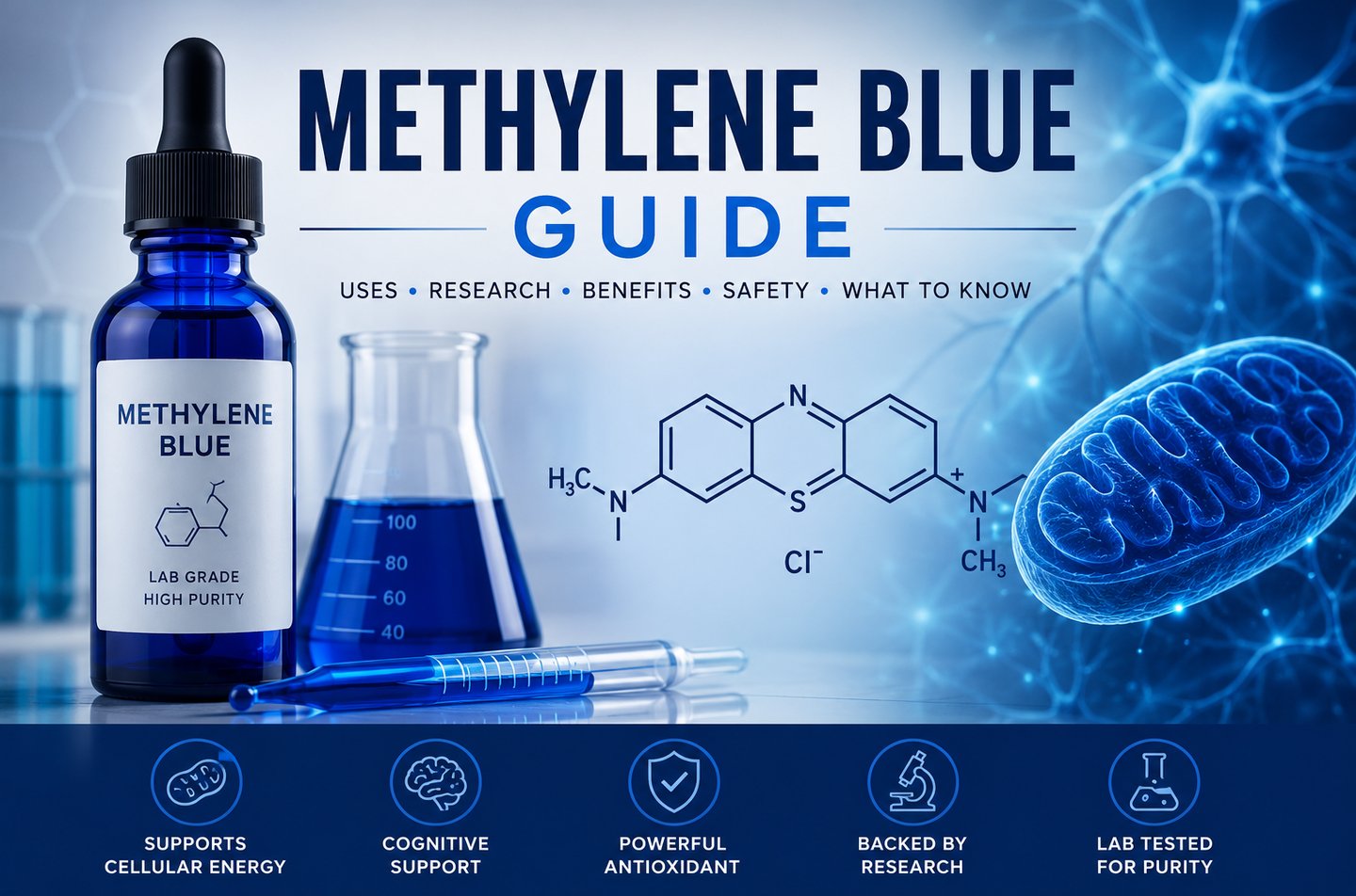
Uses, Research, Benefits, Safety, and What to Know
Methylene blue is a synthetic compound that has been used in medicine for more than a century. Originally developed as a dye, it later found applications in clinical settings and laboratory research due to its unique chemical properties and interaction with biological systems.
In recent years, it has gained renewed attention in wellness and biohacking communities, where people are interested in its potential effects on cellular energy, cognition, and metabolic function. However, interest in methylene blue also comes with important safety considerations, as it is a biologically active compound that can have significant effects on the body.
This guide provides a balanced, plain English overview of what methylene blue is, how it works, why people use it, what current research suggests, and what risks should be understood before considering any exposure or use.
What Is Methylene Blue?
Methylene blue is a synthetic chemical compound that belongs to a class of substances known as thiazine dyes. It was first created in the late 1800s and quickly adopted for both industrial and medical applications.
In medical contexts, it has been used for specific indications under professional supervision. In laboratory science, it is widely used as a staining agent because it binds to certain biological tissues and makes them easier to observe under a microscope.
Over time, researchers discovered that methylene blue also interacts with biological redox processes, which has led to ongoing scientific interest in its effects on energy production inside cells.
How Methylene Blue Works in the Body
Methylene blue interacts with cellular processes that involve oxidation and reduction reactions. These reactions are part of how cells generate energy in the form of ATP within mitochondria.
Because of this interaction, it is sometimes studied for its potential role in supporting mitochondrial efficiency and electron transport pathways.
It also has the ability to cross biological membranes and interact with neural tissue, which is one reason it has been explored in neurological and psychiatric research contexts. However, these mechanisms are still being studied, and not all effects are fully understood.
Why Do People Use Methylene Blue?
People explore methylene blue for a variety of reasons, including:
Interest in cellular energy and mitochondrial function
Cognitive performance and mental clarity
Experimental approaches to mood or neurological support
Laboratory and scientific applications
Historical medical uses under clinical supervision
In the wellness space, it is often grouped with other compounds that are believed to influence energy metabolism or oxidative balance. However, personal experimentation outside of medical supervision carries risk due to its pharmacological activity.
Potential Benefits and Research
Scientific research on methylene blue is ongoing and spans multiple fields, including neurology, microbiology, and cellular biology.
Some studies have explored its effects on:
Mitochondrial energy production
Memory and cognitive function in experimental models
Redox balance in cells
Certain types of medical imaging and diagnostic procedures
Specific clinical conditions under controlled medical use
While findings are intriguing in some areas, the overall evidence base is still developing. Many proposed benefits are not fully established for general wellness use, and results can vary significantly depending on context, dose, and individual biology.
It is important to distinguish between laboratory research, clinical use under supervision, and self directed use, as these contexts are not equivalent.
Safety Considerations and Side Effects
Methylene blue is not a neutral compound. It has pharmacological activity and can interact with multiple biological systems.
Potential risks may include:
Interactions with certain medications, especially those affecting serotonin pathways
Possible oxidative effects at inappropriate exposures
Gastrointestinal discomfort in some contexts
Neurological or cardiovascular effects at higher levels or improper use
Because of these risks, it is generally considered a compound that should only be used with appropriate medical guidance when used in a therapeutic context.
Who Should Avoid Methylene Blue?
Certain individuals may be at higher risk of adverse effects and should exercise particular caution or avoid exposure unless specifically directed by a qualified healthcare professional.
This may include:
Individuals taking serotonergic medications
People with certain metabolic or enzyme related conditions
Pregnant or breastfeeding individuals
Those with complex chronic health conditions without medical supervision
This is not a complete list, and individual risk can vary significantly.
How People Commonly Use Methylene Blue
Outside of clinical settings, methylene blue is discussed in several informal or experimental contexts, including:
Laboratory research applications
Biohacking and experimental wellness communities
Supplement discussions in online forums
Diagnostic or staining uses in scientific settings
It is important to note that informal use is not the same as medically approved treatment, and self directed use can carry risks due to variability in quality, concentration, and individual response.
What to Look for in a Quality Product
If methylene blue is being evaluated from a consumer perspective, quality and purity are critical considerations.
Key factors people often look for include:
Pharmaceutical or laboratory grade purity
Third party testing for contaminants
Clear labeling of concentration and formulation
Transparent sourcing and manufacturing standards
Avoidance of unnecessary additives or fillers
Because methylene blue is highly active biologically, product quality can significantly affect safety and consistency.
Frequently Asked Questions
What is methylene blue used for?
It has medical, laboratory, and research applications, and is studied for its effects on cellular processes and mitochondrial function.
Is methylene blue safe?
Safety depends heavily on context, dose, and individual health status. It can interact with medications and should be used cautiously.
Why is methylene blue popular in biohacking?
It is discussed in wellness communities due to its potential role in cellular energy metabolism and cognitive performance research.
Is methylene blue approved for general supplement use?
It is not a typical dietary supplement and is regulated differently depending on jurisdiction and intended use.
Final Thoughts
Methylene blue is a long studied compound with a unique place in both medical history and modern scientific research. While it shows interesting biological activity in multiple areas of study, it is not a simple wellness supplement and should be approached with caution and respect for its pharmacological effects.
For readers exploring compounds like this, it is important to distinguish between scientific research, clinical use, and consumer experimentation. More research is still needed to fully understand its broader implications.
Disclaimer
This content is for informational and educational purposes only and is not medical advice. Always consult a qualified healthcare professional before using any medication, supplement, or health related product. Do not disregard or delay professional medical advice based on information found on this site.
© 2026 1776Giveaway.com is an independent website and is not owned, operated, sponsored, or endorsed by The Alex Jones Store, Alex Jones, Bigly, Shopify, X, Instagram, YouTube, Rumble, or any giveaway sponsor. We may participate in affiliate programs and earn commissions from qualifying purchases through certain links. All trademarks, logos, brand names, images, videos, and other copyrighted materials are the property of their respective owners and are used for identification, commentary, or informational purposes only. No purchase or payment is necessary to enter or win. A purchase does not improve odds. See official rules.